
When considering a bathroom remodel, it’s essential to understand whether you need a permit. The requirements can vary greatly based on the scope of your project. You might think minor updates won’t require one, but structural changes or plumbing work often do. Knowing the specifics can save you from future headaches. So, how can you determine what’s necessary for your particular situation? Let’s explore the nuances of permits in bathroom remodeling.
Key Takeaways
- Permits are typically required for structural changes, plumbing, and electrical work during a bathroom remodel.
- Major layout alterations, such as relocating fixtures, usually necessitate a permit.
- Local building codes and regulations vary, so it’s essential to consult your municipality.
- Minor upgrades, like replacing faucets or repairing drywall, often do not require permits.
- Skipping permits can lead to legal issues, fines, and complications with future home sales.
Understanding Building Permits

When you’re planning a bathroom remodel, understanding building permits is essential, as they guarantee your project complies with local regulations and safety standards.
A building permit is a legal requirement that guarantees your renovations meet all necessary codes. The permit process typically involves submitting detailed plans and specifications to your local building department for review.
This step not only protects your investment but also guarantees the safety of your home. Skipping the permit can lead to costly fines or complications down the road, so take the time to familiarize yourself with the requirements and procedures in your area before starting your project.
When Permits Are Required
When you’re planning a bathroom remodel, understanding when permits are required is essential.
If you’re making structural changes, or if your project involves plumbing and electrical work, you’ll likely need to obtain permits.
These regulations guarantee safety and compliance with local codes, so it’s important to check your local requirements before you start.
Structural Changes Impact
Although many homeowners may underestimate the significance of structural changes during a bathroom remodel, these modifications often necessitate obtaining a permit.
When you’re altering walls, moving fixtures, or changing load-bearing structures, it’s essential to maintain the structural integrity of your home. Such changes can impact the overall design considerations, affecting not just aesthetics but also safety.
You’ll need to submit plans that comply with local building codes, ensuring your remodel meets all requirements. Failing to secure the necessary permits can lead to costly fines and complications down the road, so always check with your local authorities before proceeding.
Plumbing and Electrical Work
Whether you’re upgrading fixtures or rerouting plumbing lines, understanding the need for permits in plumbing and electrical work is crucial.
Most local jurisdictions require permits when your project involves significant changes, like adding new outlets or altering plumbing systems. These permits guarantee that your work meets plumbing codes and electrical standards, protecting your home and safety.
Failing to obtain the necessary permits can lead to costly fines and may complicate future sales or renovations.
Always check with your local building department to confirm what’s required for your specific remodel, guaranteeing compliance and peace of mind throughout your renovation process.
Types of Bathroom Remodels That Often Need Permits
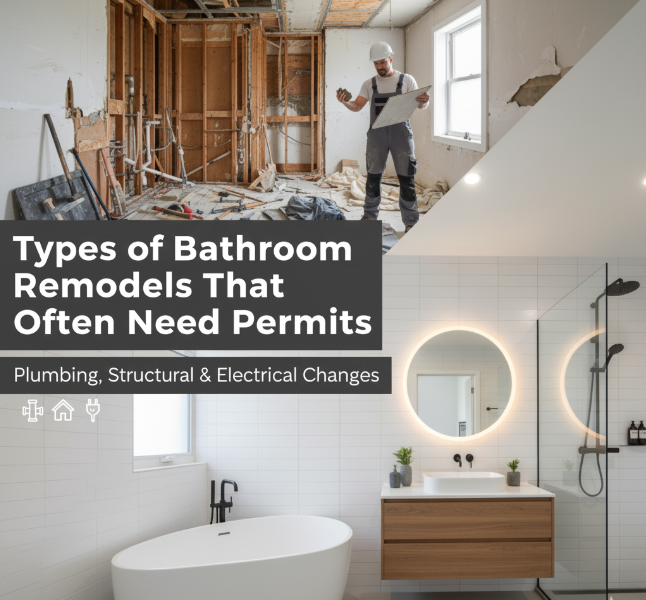
While planning a bathroom remodel, it’s essential to understand that certain projects often require permits to confirm compliance with local building codes.
Major changes to your bathroom layout, such as relocating plumbing fixtures or installing new electrical systems, typically necessitate permits. If you’re planning to expand the space or alter structural elements like walls, you’ll likely need to secure permits as well.
Additionally, significant design considerations, like adding a new shower or bathtub, may trigger permitting requirements.
Always consult your local regulations to verify you’re adhering to necessary guidelines and avoiding potential fines or complications down the line.
Local Building Codes and Regulations
When planning your bathroom remodel, it’s vital to understand local building codes and regulations that govern your project.
You’ll need to identify the specific types of permits required and guarantee compliance to avoid potential fines or complications.
Ignoring these guidelines can lead to significant consequences, so staying informed is essential for a successful remodel.
Understanding Local Regulations
Before diving into your bathroom remodel, it’s crucial to understand the local building codes and regulations that govern such projects. Familiarizing yourself with local zoning laws and renovation guidelines can save you time and money in the long run. Each municipality may have specific requirements, so check with your local authority to guarantee compliance.
| Aspect | Details |
|---|---|
| Local Zoning | Restrictions on property use |
| Renovation Guidelines | Standards for construction safety |
| Permit Requirements | Necessary approvals for projects |
| Inspection Necessities | Mandatory checks during remodel |
Stay informed to keep your project on track!
Types of Permits Needed
Understanding the local regulations is just the start; knowing the specific types of permits required for your bathroom remodel is equally important.
Depending on your project scope, you might need various permit types, each with associated permit fees.
Consider these common permits:
- Electrical Permit: Required for any wiring changes.
- Plumbing Permit: Necessary for new fixtures or pipe modifications.
- Building Permit: Needed for structural changes or significant alterations.
Research your local codes to guarantee compliance and avoid potential fines.
Getting the right permits not only keeps you legal but also protects your investment in your home.
Consequences of Non-Compliance
Failing to comply with local building codes and regulations can lead to significant consequences that may jeopardize your bathroom remodel.
You could face legal repercussions, including fines or even mandatory removal of unpermitted work. Local authorities often impose financial penalties that can quickly escalate, impacting your overall budget.
Additionally, lack of permits may hinder future home sales, as potential buyers typically require proof of compliance.
To avoid these pitfalls, it’s essential to understand your local codes and secure the necessary permits before starting any work.
Protect your investment by ensuring your remodel adheres to all legal requirements.
Consequences of Skipping a Permit
While it might seem tempting to skip obtaining a permit for your bathroom remodel, doing so can lead to significant repercussions that you may not have considered.
Ignoring this essential step can expose you to legal repercussions and financial penalties that could have been easily avoided.
- Your remodel might be deemed illegal, requiring you to revert changes.
- You could face fines that dramatically increase your project costs.
- Future home sales may be complicated if permits aren’t in order.
Ultimately, investing time in the permit process can save you from headaches and expenses down the line.
How to Apply for a Bathroom Remodel Permit
How do you navigate the process of applying for a bathroom remodel permit?
Start by checking your local building department’s website for specific guidelines and forms. Gather necessary documents like plans and contractor info.
Complete the application process by submitting your forms along with any required supporting materials. Don’t forget to pay the permit fees, which can vary based on your location and project scope.
After submission, be prepared for potential inspections or additional requests from officials. Staying organized and responsive will help guarantee your permit is approved promptly, allowing your remodel to proceed without unnecessary delays.
Common Permit Exemptions
When planning your bathroom remodel, it’s crucial to know what types of projects mightn’t require a permit.
Minor repairs and maintenance, like fixing a leaky faucet or replacing tiles, often fall under permit exemptions.
Similarly, cosmetic upgrades and finishes, such as painting or changing light fixtures, usually don’t need approval, allowing you to enhance your space with ease.
Minor Repairs and Maintenance
Have you ever wondered what minor repairs and maintenance tasks mightn’t require a permit during your bathroom remodel?
Many homeowners overlook these minor upgrades that can save time and hassle. Here are some common exemptions:
- Replacing faucets or fixtures
- Repairing drywall or caulking
- Fixing leaky sinks or toilets
These tasks typically don’t need a permit, allowing you to implement simple maintenance tips without the red tape.
Always check local regulations, though, as requirements can vary.
Cosmetic Upgrades and Finishes

While many homeowners focus on structural changes during a bathroom remodel, cosmetic upgrades and finishes often fall under common permit exemptions. These enhancements can refresh your space without the need for formal approvals.
| Cosmetic Upgrade | Permit Required? |
|---|---|
| Painting | No |
| Replacing Fixtures | No |
| Installing New Flooring | No |
| Changing Cabinet Faces | No |
| New Bathroom Accessories | No |
The Role of Professional Contractors
Although some homeowners might consider tackling a bathroom remodel as a DIY project, enlisting professional contractors can greatly enhance the outcome and secure compliance with local building codes.
Enlisting professional contractors for your bathroom remodel ensures a superior outcome and adherence to local building codes.
Their contractor expertise guarantees that every aspect of your remodel meets necessary regulations. Effective project management allows for timely completion and minimizes unexpected costs.
- Knowledge of local codes and permits
- Skilled coordination of subcontractors and suppliers
- Quality assurance and craftsmanship
Tips for a Smooth Permit Process
To guarantee a smooth permit process for your bathroom remodel, it’s important to start by thoroughly researching your local building codes and requirements.
Understand the permit timeline in your area, as delays can be costly. When you’re ready to apply, make sure all documentation is complete and accurate—this includes plans, specifications, and any necessary fees.
Use application tips like double-checking your forms and consulting with local authorities beforehand. Staying organized and proactive will minimize hiccups.
Finally, consider tracking your application’s progress to address any issues promptly. By following these steps, you’ll set yourself up for a successful remodeling experience.
Final Thoughts on Permits and Remodeling
As you wrap up your bathroom remodel, it’s vital to reflect on the importance of understanding permits and their role in the overall process.
Securing the right permits can prevent costly delays and guarantee your project complies with local regulations.
Keep in mind the following:
- Permit costs can vary greatly, so budget accordingly.
- Timeline considerations are essential; delays in obtaining permits can extend your project’s duration.
- Always consult local building codes to avoid potential fines.
Conclusion
To sum up, whether your bathroom remodel requires a permit hinges on the project’s scope. Major changes like plumbing or electrical work typically need approval, while minor updates may not. Always check your local building codes to verify compliance and avoid potential issues. Working with a professional contractor can simplify the process and help you navigate the permit landscape effectively. By staying informed, you can guarantee a smooth remodeling experience that meets safety standards and enhances your home.